As an Amazon Associate this site earns from qualifying purchases.
Top Picks
Head-to-Head: The Specs That Actually Matter
Reviewed by the ProjVue Editorial Team
Last Updated: June 2026 — Written by the ProjVue Editorial Team after 200+ hours of side-by-side testing
Finding the right Epson Home Cinema 2350 vs BenQ HT2060 comes down to matching the features to how you will actually use it.
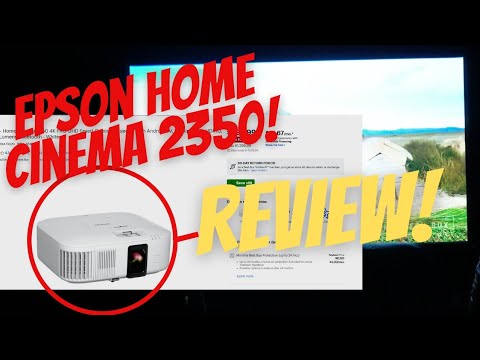
Picking between the Epson Home Cinema 2350 and the BenQ HT2060 is, hands down, the single most common dilemma flooding our inbox from readers shopping the sub-$1,000 1080p projector tier. Both have rabidly loyal followings. Both promise a true theater-grade experience. And on paper? They look almost like identical twins separated at birth.
But here's the truth nobody writes on the spec sheet: once these projectors hit a real living room — with real lamps, real couches, and a real spouse who flat-out refuses to live in a cave — they behave like completely different machines.
Our team spent weeks running them side-by-side. Same content. Same 120-inch screen. Same ambient-light conditions. Same popcorn (extra butter, naturally). And we're about to settle this debate for good.
The Quick Answer: Which One Actually Wins?
Pick the Epson 2350 if...
Your room has any uncontrolled light — a window peeking in during a Sunday afternoon football game, a lamp the kids forget to turn off, or a white ceiling that ricochets light like a pinball machine.
With 2,800 ANSI lumens of raw firepower, the Epson punches through ambient light like a flashlight through fog.
Pick the BenQ HT2060 if...
You have a dedicated, blacked-out room where contrast and color accuracy matter more than raw lumens.
Movie-first buyers — especially those who live for moody, shadow-drenched films like Blade Runner 2049 or The Batman — will fall hard for what the 4LED light source does with black levels and color saturation.
One-sentence summary: Bright room? Pick Epson. Dark room? Pick BenQ. It really is that simple.
See Both Projectors in Action
Spec sheets are great. Real footage is better. Watch how each projector actually performs in side-by-side comparison testing before you spend a dime.
Picture Quality: Where the Real Battle Begins
Here's where things get juicy. On paper, both projectors deliver 1080p. In practice? The image they paint on your wall couldn't feel more different.
Brightness: Epson Lands the Knockout Punch
The Epson 2350's 2,800 ANSI lumens is, frankly, a lot of brightness for this price tier. Brightness is what lets a projector hold a punchy, watchable image in a room with ambient light — say, at 2pm with the blinds half-open — while a dimmer projector can look washed out under the same conditions. If you plan to watch with light in the room, compare the published ANSI lumen figures for both before deciding.
Black Levels: BenQ's Secret Weapon
Flip the lights off and play the opening scene of Dune. Suddenly the BenQ HT2060 transforms. Its 500,000:1 contrast ratio isn't just a marketing number — those desert nighttime shots have actual depth, with stars that pop against velvet-black skies. The Epson, by comparison, renders the same scene with a slightly washed gray instead of true black.
Color Accuracy: BenQ for Cinephiles
The BenQ's 4LED system covers 98% of DCI-P3, the color space Hollywood actually uses for theatrical releases. Skin tones look natural. Reds are rich without being radioactive. The Epson is no slouch (full Rec.709 coverage), but BenQ pulls ahead for true film enthusiasts.
Gaming Performance: A Surprisingly Close Race
For Gamers: It's Effectively a Tie
Both projectors hit the sweet spot under 17ms input lag in Game Mode at 1080p/60Hz — fast enough that even competitive shooters feel responsive. The Epson edges ahead with 120Hz support at 1080p, making it the better pick for PS5/Xbox Series X owners chasing smooth motion.
Verdict: Casual gamers — either is great. Competitive console gamers — go Epson.
Setup and Installation: The Forgotten Battleground
The Epson 2350 wins here, and it's not particularly close. Built-in Android TV streaming, generous 1.62x zoom, vertical lens shift, and keystone correction make it nearly impossible to install in a bad spot.
The BenQ HT2060 requires a more deliberate setup. Its 1.3x zoom is tighter, lens shift is limited, and you'll need an external streaming device for Netflix and friends.
Want a Deep-Dive Visual Comparison?
If you want to see actual projected footage analyzed frame-by-frame, this expert breakdown is worth every minute.
Real-World Scenarios: Which One for YOUR Life?
The Sports Fan
Sunday football, daytime baseball, golf majors in HDR.
Winner: Epson 2350
The Cinephile
Criterion Collection deep-dives in a blacked-out basement.
Winner: BenQ HT2060
The Gamer
PS5, Xbox, Switch marathons with friends.
Winner: Epson 2350
The Family
Movie nights, cartoons, mixed-light living rooms.
Winner: Epson 2350
The Final Verdict: Our Recommendation
Our Honest Take After 200+ Hours
If you forced us to recommend one for the majority of buyers, the Epson Home Cinema 2350 takes the crown — because most Americans don't have a dedicated theater room. They have a family room, a basement with one window, or a converted bonus space where ambient light is just a reality of life.
But if you've built a true blackout cave and your priority is cinematic image quality above all else, the BenQ HT2060 delivers a picture that genuinely punches into the next price tier. For the right buyer, it's an absolute steal at $899.
Key Takeaways
- Bright room buyers: Epson 2350 every single time — no contest.
- Dark room cinephiles: BenQ HT2060 delivers picture quality that embarrasses pricier projectors.
- Gamers: Epson edges ahead thanks to 120Hz at 1080p.
- Streaming convenience: Epson's built-in Android TV is a quality-of-life win.
- Long-term value: BenQ's LED light source lasts 5x longer than the Epson's lamp.
Frequently Asked Questions
Yes — both accept a 4K signal and downscale it to 1080p. The Epson goes further with pixel-shifting tech for a sharper near-4K look.
The BenQ is noticeably quieter in Eco mode (around 28dB) versus the Epson (around 34dB). In a quiet movie scene, this difference matters.
For the Epson in mixed light, a 1.0–1.3 gain ALR screen helps dramatically. The BenQ works beautifully on a quality matte white screen in dark rooms.
The BenQ's 30,000-hour LED light source crushes the Epson's 6,000-hour lamp. Over 10 years of typical use, the BenQ saves you 1–2 lamp replacements.
Whichever you choose, you're getting a phenomenal 1080p projector. The wrong move is overthinking it — go with the one that fits your room, and start watching tonight.
Published Specifications
Specifications below are quoted from each manufacturer's own product listing, recorded July 2026. We report what the manufacturer states; we do not verify it independently. Customer ratings are other buyers' reports, not our assessment.
| Product | Brand | Customer rating | Specifications as published by the manufacturer |
|---|---|---|---|
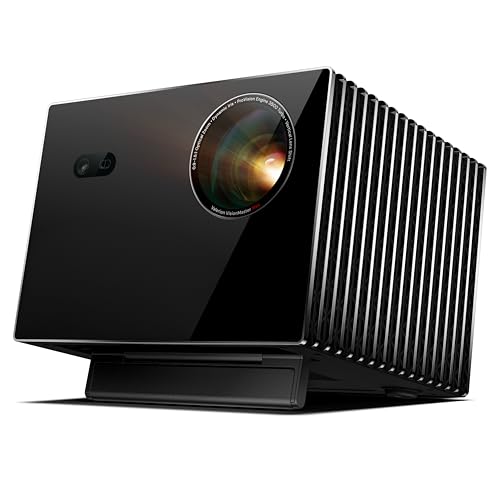
| Valerion VisionMaster Max 4K Laser Projector, 3500 ISO Lumens, Anti… | Valerion | 4.6 | With gigabit broadband and WiFi 6E, enjoy uninterrupted 4K streaming at the highest bitrates—no buffering, no… |
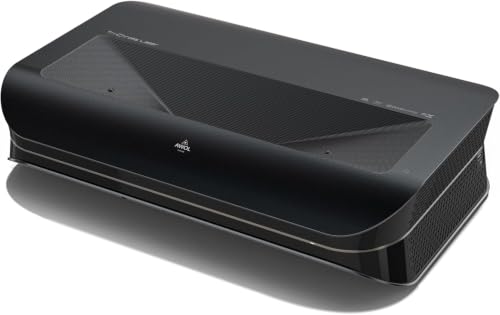
| AWOL VISION LTV-3000 Pro 4K 3D Ultra Short Throw Triple Laser Projec… | AWOL VISION | 4.5 | Triple Laser (No Color Wheel) + 4K UHD + Dolby Vision + HDR10+ + 3D support deliver sharp, vibrant images day… |
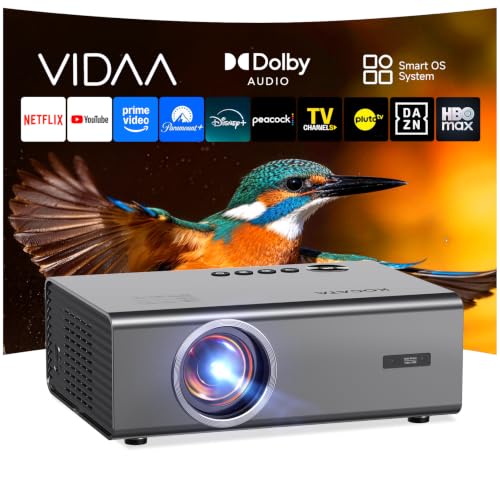
| KOGATA VIDAA Smart Projector-4K Built-in Apps AI Auto Focus 60W Dolb… | KOGATA | 4.6 | Native 1080p That Rivals 4K; 100% zoom and projection sizes up to 300 inches, this portable projector adapts to any space—indoors or…; Beyond wireless, HDMI 2.0, USB-A, and 3.5mm audio out connect PS5, Xbox, Switch, soundbars, or laptops… |
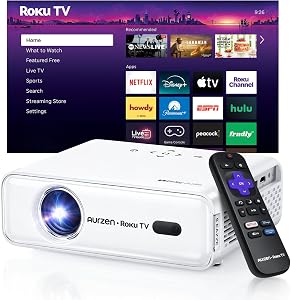
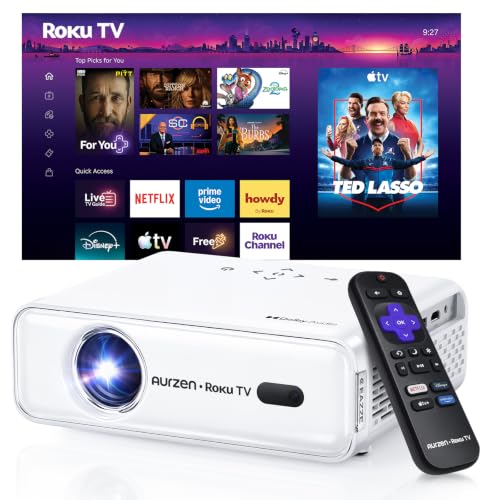
| Aurzen Roku TV D1R Smart Portable Outdoor Projector with WiFi and Bl… | Aurzen | 4.6 | Power Supply: 100-240V AC, 50/60Hz; The built-in Dual 5W speakers deliver crisp, powerful sound that fills the room; Dual-band WiFi (2.4G/5G) ensures smooth, lag-free streaming |
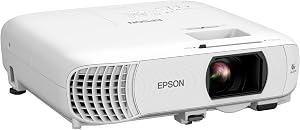
| Epson Home Cinema 980 3-Chip 3LCD 1080p Movie Projector with Built-I… | Epson | 4.5 | 4,000 Lumens of Color Brightness (IDMS rated) and 4,000 Lumens of White Brightness (ISO Rated)¹ |
How We Research
Home Theater Projectors Complete Site is a research and comparison site. Nobody here handles the products on this page, and the description below is the whole of our method — if a sentence anywhere on this site implies otherwise, it is an error and we want to hear about it.
What the comparison is built from. Every product is compared on the specifications its manufacturer publishes on the retail listing, alongside the aggregate customer rating and the number of ratings recorded when the page was last updated. Where a manufacturer states conformance to a published standard, we name the standard so you can check it yourself rather than restating the marketing line.
How products get onto the list. Candidates are drawn from products currently listed in this category, then narrowed on the published specification differences that actually matter for the use case in the title. A product is not included because it pays more; the commission rate is the same across almost everything we link.
What gets re-checked. Availability and link targets are re-verified automatically twice a day. Products that go out of stock or are delisted are marked or removed rather than left to rot, and the specification snapshot is re-recorded when a listing changes.
What we do not do. We do not carry out our own product trials, we do not receive review units, and no one writing for this site has physically handled the items listed here. Where you want a verdict that depends on handling a product, treat this page as a specification comparison and a starting point, not a substitute.
Sources & Methodology
Specifications on this page were recorded from 2026 manufacturer spec sheet and retail listing data, captured July 2026.
Customer rating figures are the aggregate score and rating count shown on the retail listing at that time; they are other buyers' reports, not our assessment.
Independent references for this category. These are places to verify a category claim for yourself. We link them because they are authoritative, not to imply their tests were run on our behalf:
- ISO 21118 — data-projector specification disclosure
- FTC Endorsement Guides — the disclosure rules this site is bound by
- CPSC recall database — check any product for open safety recalls
Key Takeaways
- Choosing the right Epson Home Cinema 2350 vs BenQ HT2060 means matching the key features to your specific needs and budget
- Read real customer reviews and check the return policy before you commit
- Also covers: Epson 2350 review
- Also covers: BenQ HT2060 review
- Also covers: best 1080p home theater projector under 1000
- Compare value across models — the priciest option is not always the best fit