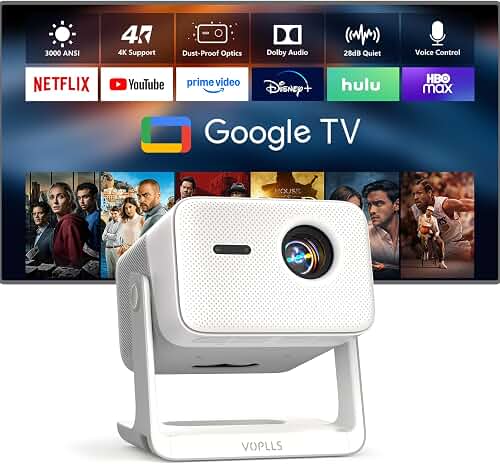
Specs at a glance
| Feature | Hisense C1 | XGIMI Horizon Ultra |
|---|---|---|
| Light source | Triple-laser (TriChroma) | Dual Light 2.0 (LED + laser) |
| Resolution | 4K UHD (XPR) | 4K UHD (XPR) |
| Brightness | 1,600 ANSI lumens | 2,300 ISO lumens (~1,500 ANSI equivalent) |
| Throw ratio | 1.2:1 | 1.2-1.5:1 (1.07x zoom) |
| 100-inch distance | ~10.5 ft | ~8.6-10.8 ft |
| HDR support | HDR10, HDR10+, Dolby Vision | HDR10, HLG (no Dolby Vision) |
| Auto setup | Auto focus, auto keystone | ISA 3.0: focus, keystone, obstacle, screen fit, eye protection |
| Speakers | 2x 10W JBL | 2x 12W Harman Kardon |
| Smart OS | Google TV (with Netflix) | Android TV 11 (no native Netflix) |
| Input lag (1080p/60) | ~30 ms | ~26 ms (game mode) |
| Fan noise | ~30 dB | ~28 dB |
For a coffee table, no-mount living room setup in 2026, the Hisense C1 vs XGIMI Horizon Ultra coffee table decision comes down to throw distance, auto-geometry, and how aggressively the projector can fight ambient light. The XGIMI Horizon Ultra is the friendlier coffee-table pick for most rooms: its 1.2-1.5 throw ratio plus mature ISA 3.0 auto keystone, auto focus, and auto obstacle avoidance let it hit a 100-inch image from roughly 8.6 to 10.8 feet and self-correct when you nudge it. The Hisense C1 needs a slightly longer 1.2:1 throw, throws a punchier 1,600 ANSI-lumen Dolby Vision image, and is the better pick if your sofa-to-wall distance is generous and image fidelity beats setup speed.
Quick verdict: which one wins your coffee table?
Both projectors are triple-laser 4K units in roughly the same price bracket, both can sit on a coffee table without a ceiling mount, and both have integrated speakers good enough to skip a soundbar for casual viewing. But they solve the no-mount problem differently. The Horizon Ultra was designed as a portable-ish living room projector with hybrid LED+laser optics and the most forgiving auto-setup stack on the market. The C1 was designed as a near-flagship laser TV replacement that happens to be small enough to live on a coffee table, with brighter output, better HDR, and a more cinematic tone but a stricter setup envelope.
The best Hisense C1 vs XGIMI Horizon Ultra coffee table for your situation depends on how you plan to use it and where.
The short answer in the Hisense C1 vs XGIMI Horizon Ultra coffee table matchup: pick the Horizon Ultra if you reposition the projector often, have kids or pets, or your room geometry is awkward. Pick the C1 if you leave the projector parked, watch a lot of HDR/Dolby Vision content, and want the most theatrical image.
Coffee table physics: can either one actually fit?
This is where most coffee-table projector plans fall apart. A standard living room coffee table sits 8 to 11 feet from the wall, depending on whether you measure to the projector's lens or the back of the chassis. That distance has to match the projector's throw ratio.
The Hisense C1 has a fixed 1.2:1 throw ratio, meaning a 100-inch 16:9 image needs about 10.5 feet of lens-to-screen distance. If your coffee table is closer than that, your image will be smaller than 100 inches unless you push the table back. There is no optical zoom to compensate.
The Horizon Ultra has a 1.2 to 1.5 throw ratio with a 1.07x optical zoom, so a 100-inch image can land anywhere from roughly 8.6 to 10.8 feet. That extra slack is enormous in real rooms because coffee tables rarely sit at the exact perfect distance. If you want to dig deeper into geometry before you commit, our projector throw distance and screen size guide walks through the math with worked examples.
Auto setup: where the Horizon Ultra pulls ahead
No-mount setups get bumped. Someone reaches for the remote, the dog walks past, the table gets nudged a half inch. The projector that recovers fastest from those bumps is the one that disappears into the room.
XGIMI's Intelligent Screen Adaption 3.0 handles five things automatically: focus, keystone, screen alignment, obstacle avoidance (so your image dodges a wall-mounted shelf or picture frame), and eye protection that dims the lamp when someone walks in front of the lens. It re-runs whenever the projector senses motion. It is not perfect, but it is the most forgiving system shipping in 2026.
The Hisense C1 has auto focus and auto keystone, and that is it. Both work, but you may need to trigger them manually after a bump, and there is no obstacle avoidance, so a poorly placed bookshelf will get half your image painted on it. For permanently parked installations this is a non-issue. For active living rooms, it matters daily.
Brightness and ambient light
The C1 is the brighter projector by a meaningful margin once you account for measurement standards. Hisense's 1,600 ANSI rating is conservative and consistent with the brand's laser TV lineage. The Horizon Ultra's 2,300 ISO lumens translates to roughly 1,500 ANSI lumens after derating for the looser ISO 21118 standard.
In a living room with one curtained window and a couple of lamps on, both are watchable. In a bright daytime room with sunlight bouncing off white walls, neither is ideal but the C1 holds contrast better. If your living room runs bright most of the time, look at our roundup of home theater projectors for bright rooms before you spend on either one. For dark-room movie nights, both look excellent and the brightness gap narrows.
Image quality: HDR, color, and motion
The C1 supports HDR10, HDR10+, and Dolby Vision. The Horizon Ultra supports HDR10 and HLG but does not pass Dolby Vision. If your streaming library leans heavily on Netflix, Disney+, or Apple TV+ Dolby Vision masters, the C1 will tone-map those with the metadata they were authored for, which generally yields more accurate highlight handling.
Color volume is roughly a wash. The C1's triple-laser engine covers 110% of BT.2020 on paper, which is genuinely huge. The Horizon Ultra's hybrid Dual Light 2.0 engine covers about 95% of DCI-P3 with less laser speckle, a softer, more film-like image, and noticeably fewer rainbow artifacts for people sensitive to single-chip DLP rainbows.
Motion handling on both is competent. Neither is JVC-tier, but both have selectable frame interpolation if you want it. For a deeper dive on the XGIMI's image specifically, see our full XGIMI Horizon Ultra review.
Audio: skipping the soundbar
The Horizon Ultra has 2x12W Harman Kardon speakers tuned with a small built-in passive radiator, and the staging is wider and cleaner than the C1's 2x10W JBL drivers. Both are fine for casual TV, sports, and YouTube. Neither replaces a real soundbar for movies. The good news: both have eARC, optical, and Bluetooth out, so adding sound later is painless. Our guide on how to connect a soundbar to a projector covers the lip-sync gotchas that hit both of these models.
Smart platform and casting
The Hisense C1 ships with Google TV and native Netflix, which sounds trivial but is the single biggest day-to-day quality of life difference. The Horizon Ultra runs Android TV 11 without licensed Netflix, so most owners end up sideloading or plugging in a Fire TV/Chromecast, which kills some of the cable-free aesthetic of a coffee-table install. Both have Chromecast built in.
Gaming
Both hit roughly 25 to 30 ms of input lag at 1080p/60 in game mode. Neither is a 4K/120 machine; the Horizon Ultra tops out at 4K/60 and the C1 supports 4K/60 with ALLM. For casual console gaming both are fine. For competitive shooters or PS5/Xbox Series X owners who want VRR and 4K/120, look elsewhere - our list of the best 4K projectors for PS5 VRR gaming covers the dedicated gaming options.
No-mount practicality
Three small things matter for coffee-table life:
- Heat exhaust direction: The C1 exhausts out the back. The Horizon Ultra exhausts out the sides. If your coffee table is pushed against a sofa, the C1's rear vent will dump heat into the cushions.
- Cable management: Both have power on the back; the Horizon Ultra's port cluster is slightly more recessed and easier to hide.
- Footprint: The C1 is taller and chunkier (about 9.4 lbs). The Horizon Ultra is flatter and lighter (about 11.2 lbs but wider and lower-profile). On a glass coffee table the Horizon Ultra looks less awkward.
Neither is silent, but both stay under 30 dB in their eco modes, quiet enough that you forget they are running once dialogue starts.
Which one should you buy?
If you want the simplest possible coffee-table experience - put it down, point it at a wall, watch a movie - the XGIMI Horizon Ultra is the right pick. The zoom range, ISA 3.0 auto setup, obstacle avoidance, and quieter exhaust all favor a casual no-mount lifestyle.
If you care more about image quality, watch a lot of Dolby Vision content, and your room geometry happens to land near 10.5 feet, the Hisense C1 delivers a more theatrical picture, a brighter image for ambient light, and Google TV's Netflix support out of the box.
For most living rooms, the Horizon Ultra wins because it adapts to the room. For dedicated movie watchers with a fixed setup, the C1 wins because it does not need to adapt. Either way, plan your screen first - a good ALR or neutral-gain matte white screen will outperform a wall paint job, and our best laser projectors for home theater guide has compatible screen recommendations for both light engines.
Frequently Asked Questions
Can the Hisense C1 or XGIMI Horizon Ultra project from a low coffee table without a ceiling mount?
Yes, both are designed for tabletop placement. Both have built-in adjustable feet, and both auto-keystone to correct minor angle and tilt. The Horizon Ultra is more forgiving because of its 1.07x zoom and obstacle avoidance, while the C1 needs more precise placement because it has no optical zoom. Neither requires a ceiling mount for a 100-inch image in a typical living room.
How far should the projector be from the wall for a 100-inch image?
The Hisense C1 needs roughly 10.5 feet for a 100-inch diagonal image because of its fixed 1.2:1 throw ratio. The XGIMI Horizon Ultra can produce a 100-inch image anywhere from about 8.6 to 10.8 feet thanks to its 1.2-1.5 throw range. Measure from the front of the lens to the wall, not from the back of the chassis.
Will my coffee table block the bottom of the image?
Generally no. Both projectors have a vertical offset that throws the image upward from the lens centerline, and both auto-correct keystone so the image lands as a clean rectangle on the wall. If your coffee table is unusually tall or the projector tips backward, you can stack a thin book or use the built-in feet to fine-tune the angle.
Do either of these need an ALR screen for coffee table use?
Neither requires an ALR screen because their throw ratios are too long for short-throw ALR material. A standard 1.0 to 1.3 gain matte white screen works perfectly with both. If you have a bright living room, a ceiling-light-rejecting screen designed for standard-throw projectors will boost contrast meaningfully on either one.
Is the Hisense C1 or Horizon Ultra quieter for living room use?
The Horizon Ultra runs about 2 dB quieter than the C1 in eco mode, which is barely perceptible. The bigger practical difference is exhaust direction: the C1 vents out the back toward your sofa, while the Horizon Ultra vents out the sides. For coffee tables pushed against seating, the Horizon Ultra is the more comfortable choice.
Does the XGIMI Horizon Ultra support Dolby Vision like the Hisense C1?
No. The Horizon Ultra supports HDR10 and HLG only. The Hisense C1 supports HDR10, HDR10+, and Dolby Vision. If your streaming library is heavy on Netflix or Apple TV+ Dolby Vision masters, the C1 will tone-map them more accurately. For HDR10-only content the gap is much smaller.
Can I move the projector between rooms without redoing setup?
Both projectors re-run their auto setup routines when moved, but the Horizon Ultra is dramatically faster and more reliable at this. ISA 3.0 typically completes focus, keystone, and screen-fit in under five seconds. The Hisense C1's auto setup takes longer and sometimes needs a manual trigger from the remote after a move. For multi-room or portable use, the Horizon Ultra is the clear winner.
Key Takeaways
- Choosing the right Hisense C1 vs XGIMI Horizon Ultra coffee table means matching the key features to your specific needs and budget
- Read real customer reviews and check the return policy before you commit
- Also covers: Hisense C1 review coffee table setup
- Also covers: XGIMI Horizon Ultra tabletop placement
- Also covers: no mount projector comparison
- Compare value across models — the priciest option is not always the best fit