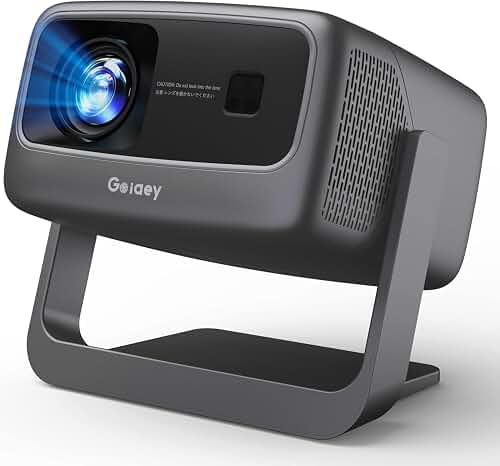
To power projector outdoor shed solar battery setups reliably, you need three numbers: your projector's wattage draw (typically 150-300W for a home theater unit, 60-120W for a portable LED model), your nightly runtime in hours, and 25-40% headroom for inverter losses and battery depth-of-discharge limits. For a 200W projector running three hours per movie night, target a 1000Wh+ LiFePO4 power station paired with 200W of solar panels and a pure sine wave inverter rated for at least 2x continuous draw. This guide walks through panel sizing, battery chemistry, inverter selection, weatherproofing the shed, and realistic runtime math so your outdoor cinema actually finishes the third act.
Why solar plus battery is the right architecture for a shed cinema
Running an extension cord from the house to a backyard shed seems easier on paper, but in practice it creates voltage drop at distances over 50 feet, trips GFCI outlets when the projector's lamp ignites, and forces you to keep a 12-gauge cord coiled across the lawn every weekend. A self-contained solar-and-battery system inside the shed eliminates the cord, runs silently (unlike a generator), and lets you operate the shed cinema even during grid outages. The trade-off is upfront cost and the discipline to actually sit through sizing math before clicking buy. Skip the math and you will hit low-voltage cutoff in the middle of the movie, which is how most first-time builds end.
When shopping for power projector outdoor shed solar battery, it pays to compare specs, capacity, and real-world runtime before committing.
Step 1: measure your projector's real wattage draw
Manufacturer spec sheets list maximum lamp draw, but real-world consumption is lower when you run in eco or bright-room modes. A traditional lamp-based 1080p home theater projector typically draws 220-280W in normal mode and 150-200W in eco. A 4K laser projector draws 200-350W depending on brightness setting. A portable LED projector like a Nebula or XGIMI Halo+ draws 60-90W. Plug a Kill-A-Watt meter into your wall outlet for one full movie before you size anything. Record the average draw, not the peak, because lamp ignition pulls a short surge that the inverter must handle but does not significantly affect the energy total. If you have not yet picked the projector itself, our portable mini projector guide covers low-wattage options that pair especially well with off-grid setups.
Step 2: calculate total watt-hours per movie night
Multiply projector wattage by hours of use, then add the draw of your speaker system, streaming stick, and any LED lighting. A typical shed cinema load looks like this: 220W projector x 3 hours = 660Wh, plus 30W soundbar x 3 hours = 90Wh, plus 5W Fire TV stick x 3 hours = 15Wh, plus 10W ambient LED strip x 3 hours = 30Wh. Total: 795Wh per movie night. Now add inverter overhead. A typical pure sine wave inverter is 85-90% efficient, so divide by 0.87 to get 914Wh of DC draw from the battery. If you want to run two movie nights between solar recharges, double it to 1828Wh. This is the minimum usable battery capacity, not the nameplate rating, which matters when you choose chemistry.
Step 3: pick a battery chemistry and size with depth-of-discharge in mind
LiFePO4 (lithium iron phosphate) is the only sensible choice for a shed cinema in 2026. It tolerates 80-90% depth of discharge without damaging cycle life, handles 3000-6000 cycles to 80% capacity, and is far safer thermally than NMC lithium chemistries when an unventilated shed bakes in summer sun. Lead-acid AGM batteries are tempting on price, but you can only safely use 50% of nameplate capacity, they weigh four times more per usable watt-hour, and they last 300-500 cycles instead of thousands. For our 914Wh nightly load, an LiFePO4 power station with at least 1200Wh nameplate (giving roughly 1000Wh usable) covers one movie night with comfortable margin. For two-night autonomy, step up to 2000-2500Wh nameplate. All-in-one power stations from established brands (EcoFlow Delta 2, Bluetti AC180, Anker SOLIX, Jackery Explorer 1500) bundle the LiFePO4 cells, MPPT charge controller, and pure sine inverter in one weatherproof case with USB outputs for accessories.
Step 4: size solar panels for realistic recharge
To power projector outdoor shed solar battery systems sustainably, your panels must replace what you used the night before, plus losses, before the next movie night. Real-world solar panel output is roughly 60-75% of nameplate rating averaged across a sunny day, due to angle, temperature derating, dust, and cloud transients. A nominal 200W panel typically delivers 800-1100Wh in a summer day at 35 degrees north latitude. Winter cuts that in half. For our 914Wh nightly load with a weekly movie schedule, 200W of panels is the comfortable summer minimum and 400W is the year-round target if you want to use the cinema in November. Mount panels on the shed roof angled toward true south at a tilt equal to your latitude. Avoid mounting flat on a horizontal roof: you lose 25% of annual production and shed dust faster than you can clean.
Step 5: inverter sizing and the surge problem
Projectors with traditional UHP lamps draw a brief inrush current of 3-5x their running wattage during lamp ignition. A 250W projector can momentarily pull 1000-1200W for half a second. Your inverter must handle this surge without faulting, or the projector will fail to start and you will think your battery is bad. Choose a pure sine wave inverter rated for at least 2x your continuous load (so a 500-800W continuous inverter for a 250W projector) with a documented surge rating of 1500W or higher. Modified sine wave inverters are cheaper but cause audible buzzing in projector audio circuits and can damage power supplies in laser-phosphor projectors over time. The integrated inverters in name-brand portable power stations are universally pure sine and rated for substantial surge, which is another reason they beat DIY component builds for first-time shed setups.
Step 6: weatherproofing the shed itself
LiFePO4 cells charge poorly below freezing and degrade rapidly above 113F (45C). An uninsulated metal shed in July afternoon sun hits 140F inside, which will void your battery warranty and shorten cell life dramatically. Mitigations, in order of cost: park the battery in the shaded corner away from the south wall, install a small ridge vent and a low intake vent for passive convection, paint the shed roof white or install a radiant barrier, and (most effective) insulate the walls and roof with 1-inch rigid foam. In cold climates, bring the battery indoors during deep winter or run a small 12V thermostat-controlled heating pad under it. Mount the inverter and any wiring at least 6 inches off the floor in case of flooding, and use a sealed enclosure if your shed lacks a proper vapor barrier.
Step 7: cable runs, fusing, and the screen itself
Keep DC runs from panel to charge controller under 20 feet using 10 AWG cable to minimize voltage drop. Fuse the battery output within 7 inches of the positive terminal at a rating matching your inverter's input current (typically 80-150A for a 1000W inverter at 12V). Use marine-grade tinned copper for any exterior runs. For the projector itself, a fixed-frame screen mounted on the shed wall opposite the projector simplifies the cable layout and weatherproofs the optical path. If you are still deciding on a screen, the surface gain and ambient-light rejection trade-offs are covered in our outdoor projector guide, which addresses the related challenge of viewing in partial ambient light common to shed setups with windows.
Step 8: real-world runtime expectations across the seasons
A well-sized system (1500Wh LiFePO4, 300W of panels, 1000W pure sine inverter) running a 200W projector and 30W soundbar will give you roughly 5-6 hours of cinema per fully charged battery, and recharge from 20% to 100% in 6-7 hours of summer sun or 10-14 hours of partial winter sun spread across multiple days. Plan one movie night per recharge cycle in summer and one movie night every other day in winter at northern latitudes. If your usage exceeds that, scale panels first (cheaper per added watt-hour) and battery second.
Picking between a power station and a DIY build
A 1500-2000Wh LiFePO4 power station costs $900-1500 in 2026 and includes the battery, MPPT charge controller, pure sine inverter, USB outlets, and a display showing input and output watts in real time. A DIY build using a 100Ah server-rack LiFePO4 battery, a separate Victron MPPT controller, a Renogy or AIMS inverter, fuses, and bus bars can land at $700-1100 for similar usable capacity but takes a weekend to wire and requires you to source the charger separately. For most shed cinema builders, the power station wins on time, warranty, and the integrated display that prevents you from accidentally over-discharging. DIY wins if you want to expand later by adding battery modules in parallel or if you already own a charge controller. After the system is running, walk through our projector setup guide to dial in geometry, focus, and color before your first screening.
Frequently Asked Questions
How many solar panels do I need to run a projector in a shed off-grid?
For a 200-250W home theater projector running 3 hours per night with a soundbar, plan on 200W of panels for occasional summer use, 300-400W for year-round weekly use, and 500W+ if you want daily use in winter at northern latitudes. Panels are the cheapest part of the system per watt-hour delivered, so oversize them rather than the battery if you must choose.
Can a Jackery or EcoFlow power a projector for a full movie?
Yes, a 1000Wh+ LiFePO4 power station like an EcoFlow Delta 2, Jackery Explorer 1000 Plus, or Bluetti AC180 will run a 200W projector for 3-4 hours on a full charge, which covers a full feature film with margin for the soundbar and a streaming stick. Confirm the inverter is pure sine wave (all current models from those brands are) and rated for at least 1000W continuous to handle lamp ignition surge.
What size inverter do I need for a home theater projector?
Choose a pure sine wave inverter rated for at least 2x the projector's continuous draw with a documented surge rating of 3-5x. For a 250W projector, that means 500-800W continuous and 1500W+ surge. Lamp-based projectors have higher inrush than laser models, so size up if you are running a UHP lamp unit older than 2022.
Will a LiFePO4 battery survive winter in an uninsulated shed?
LiFePO4 cells cannot accept charge below 32F (0C) without permanent damage, though they can discharge down to -4F (-20C). Cold-rated power stations include internal heaters that warm the cells before charging. For uninsulated sheds in climates with sustained freezing temperatures, either choose a model with built-in low-temperature charging (EcoFlow and Bluetti both offer this), add a thermostat-controlled heating pad, or bring the battery indoors during the coldest months.
How long will a 1000Wh battery run a projector?
A 1000Wh LiFePO4 battery delivers roughly 800-870Wh of usable AC output after inverter losses. For a 200W projector and 30W soundbar (230W combined), that is approximately 3.5-3.8 hours of runtime. For a portable 80W LED projector with a small speaker, expect 8-10 hours. Always reserve 10-20% headroom for the speaker amp's dynamic peaks and any LED lighting.
Can I charge the battery while the projector is running?
Yes, and this is a major advantage of solar-plus-battery setups for daytime testing or twilight screenings. Most LiFePO4 power stations pass solar input through to AC output (called pass-through or UPS mode) so you can run the projector at the same time the panels are recharging. Output will be reduced if solar input exceeds the inverter's capacity, but the system continues running normally and the battery either holds steady or charges slowly.
Is a generator better than solar for a shed cinema?
A small inverter generator (Honda EU2200i, Yamaha EF2000iS) will absolutely run a projector and costs less upfront than a solar build, but it is loud enough to ruin movie audio at typical shed-to-house distances, requires storing and rotating gasoline, and cannot run indoors due to carbon monoxide. Solar plus battery is silent, fume-free, and once installed has no ongoing fuel cost. For occasional use a generator may pencil out; for any recurring movie night ritual, solar wins on lifestyle.
The short version
To power projector outdoor shed solar battery systems end-to-end: measure your projector's real wattage with a Kill-A-Watt, multiply by hours and add 20-30% for inverter losses to get nightly watt-hours, pick a LiFePO4 power station with at least 1.5x that nameplate capacity, add 200-400W of panels angled toward true south, ventilate or insulate the shed against summer heat, and confirm the inverter is pure sine wave with adequate surge headroom. Build it once with margin and the shed cinema runs itself for years.
Key Takeaways
- Choosing the right power projector outdoor shed solar battery means matching the key features to your specific needs and budget
- Read real customer reviews and check the return policy before you commit
- Also covers: off-grid projector shed solar power
- Also covers: solar power projector outdoor cinema
- Also covers: battery powered projector shed setup
- Compare value across models — the priciest option is not always the best fit