As an Amazon Associate this site earns from qualifying purchases.
Top Picks
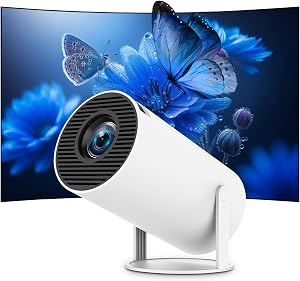
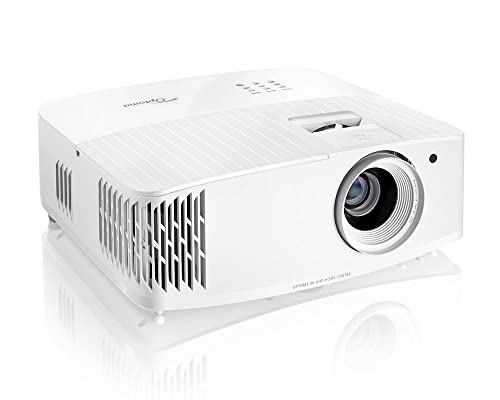
![Mini Portable Projector 4K WiFi 6 BT 5.2 Upgraded Portable Projector Full HD Supported for Phone /PC /TV /HDMI /PS5 /Laptop Auto Keystone Home Theater 180° Rotation [Built-in App] White](https://projvue.com/aimg/images/I/41BENoJ6zpL._SL500_.jpg)
Published Specifications
Specifications below are quoted from each manufacturer's own product listing, recorded July 2026. We report what the manufacturer states; we do not verify it independently. Customer ratings are other buyers' reports, not our assessment.
| Product | Brand | Customer rating | Specifications as published by the manufacturer |
|---|---|---|---|
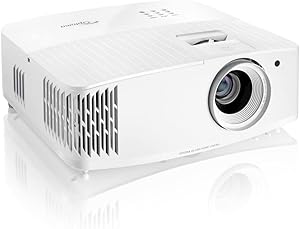
| Optoma UHD38x Bright, True 4K UHD Gaming Projector | 4000 Lumens | 4… | Optoma | 3.7 | True 4K Ultra HD |
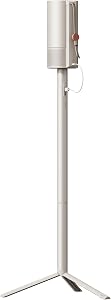
| XGIMI MoGo 3 Pro NEW Outdoor Projector with PowerBase Stand, 2.5hrs… | XGIMI | 4.4 | C 65W power bank for endless entertainment under the stars |
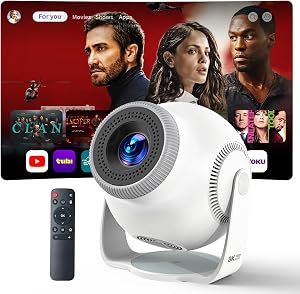
| Mini Projector, Portable Smart Projector 4K WiFi 6 BT 5.4 [Built-in… | Thunrlge | 4.3 | Mini Projector, Portable Smart Projector 4K WiFi 6 BT 5.4 [Built-in App] | | | | | | | | | | | | | | | | | | | | | | | | | | | | | | | | | | | | | | | | | | | | | | | | | | | | | | | | | | | | | | | | | | | | | | | | | | | |
Reviewed by the ProjVue Editorial Team
Finding the right how to choose a home theater projector under 1000 comes down to matching the features to how you will actually use it.
Last Updated: June 2026 — Written by the ProjVue Editorial Team
The sub-$1000 home theater projector segment is the most competitive it has ever been. Five years ago, that budget bought you a 1080p DLP unit with washed-out blacks, a noisy fan, and a lamp that demanded replacement every 18 months. In 2026, the same money buys native 4K-capable pixel-shifting panels, laser light sources rated for 20,000+ hours, motorized lens shift on some models, and HDR10/HLG support that actually looks closer to the source than it has any right to.
But that competition also means the category is now full of marketing noise. Specs that sound impressive on a product page collapse the moment you put the unit on a wall in a real living room. This guide walks through how to choose a home theater projector under $1,000: which specs genuinely matter, which to ignore, and how to match a model to your specific room, content, and viewing habits.
Our picks are attached separately by our editorial system once they have been verified against live retail data — this article focuses on giving you the framework to evaluate any affordable 4K projector or budget home theater projector you come across, so the recommendations make sense rather than feeling like a list pulled from thin air.
What "Home Theater Projector Under $1000" Actually Means in 2026
The phrase covers three meaningfully different product types, and confusing them is the single most common mistake buyers make.
1. Long-throw lamp/LED 1080p projectors. The old guard. Cheapest entry point, often $300–$500, native 1080p, lamp or LED light source, designed to sit 8–15 feet from the screen. Good for casual movie nights, bad for daylight viewing.
2. Long-throw 4K pixel-shifting projectors. The sweet spot of the category. Native resolution is usually 1080p or 2716×1528, but a fast-shifting mirror (DLP) or panel (LCD) places pixels in four positions per frame, delivering a 3840×2160 image on screen. With a decent light engine and HDR tone mapping, the picture quality difference versus a true native 4K unit is genuinely small at normal seating distances.
3. Ultra-short-throw (UST) 4K laser projectors. A few brands have pushed UST units into the sub-$1000 bracket in 2026, sitting inches from the wall and throwing a 100"+ image. They are convenient and bright, but the cheaper end of UST suffers from rainbow artifacts, geometry distortion at the corners, and inflated contrast claims. Be cautious here.
Knowing which of these three you are shopping for prevents almost every buying regret in this category.
The Specs That Actually Matter (and the Ones That Don't)
Projector marketing leans on numbers that sound technical but are often meaningless without context. Here is how we weight each spec when evaluating units in this price band.
Brightness (ANSI lumens, not "LED lumens")
This is the single most over-marketed number in the category. A projector listed at "15,000 lumens" for $400 is almost certainly quoting LED lumens, light source lumens, or a proprietary measurement that has no relation to the ANSI lumen standard used in real industry testing.
For a dedicated dark-room home theater, 1,500–2,500 ANSI lumens is plenty. For a living room with some ambient light, you want 2,500–3,500 ANSI lumens. Anything claiming over 4,000 ANSI lumens at this price should be treated with skepticism until verified by an independent test. If a product page does not specify "ANSI lumens," assume the real number is roughly one-third of what is advertised.
Native vs. Accepted Resolution
A projector that "accepts a 4K signal" and a projector that "displays a 4K image" are not the same product. Accepted-resolution units downscale the signal to 1080p before projecting it — useful for compatibility, irrelevant for image quality.
For a true 4K image at this price, look for one of:
- 0.47" DMD with XPR pixel shift — the most common sub-$1000 4K DLP chipset, shifts pixels four times per frame.
- 0.66" DMD with XPR pixel shift — found in higher-end units pushing the $1000 ceiling, larger chip, better contrast.
- 3LCD with 4K enhancement — uses three LCD panels plus pixel shifting, often slightly softer than DLP but with better color saturation.
Contrast Ratio
Ignore the "dynamic contrast" or "full on/full off" numbers. A projector listed at 1,000,000:1 dynamic contrast typically delivers a real-world ANSI contrast of 300:1 to 600:1, which is what actually determines whether black levels look gray or genuinely black.
Under $1000, expect ANSI contrast in the 400:1–800:1 range. Anything beyond that requires a step up in price or a laser/LCoS technology that is rarely in this budget.
Color Coverage
Look for the percentage of Rec.709 (HDTV color gamut) or DCI-P3 (cinema gamut). A good sub-$1000 unit will cover 95–100% of Rec.709 and somewhere between 70% and 90% of DCI-P3. Models that quote "125% Rec.709" are usually oversaturated, which sounds nice but actually makes skin tones look unnatural.
Light Source: Lamp, LED, or Laser
In 2026 the laser-phosphor light source has dropped far enough in cost that it is the default recommendation in this price bracket if your model offers it.
- Lamp (UHP/UHE): Cheapest. 3,000–6,000 hour rated life. Replacements run $80–$200. Brightness degrades noticeably after 1,500 hours.
- LED: Long-lived (20,000+ hours), excellent color, but typically dimmer than lamp or laser. Common in compact and portable units.
- Laser-phosphor: 20,000–30,000 hour rated life. Maintains brightness much longer. Instant on/off. Slightly more expensive but pays for itself by year three of regular use.
Throw Ratio and Lens Shift
Throw ratio tells you how far the projector needs to sit from the screen to produce a given image size. A throw ratio of 1.5 means the projector sits 15 feet away to produce a 10-foot-wide image.
In a typical 12–15 foot living room, look for a throw ratio between 1.2 and 1.6 for a 100"–120" image. Short-throw units (0.5–1.0) are for tight rooms. Ultra-short-throw units (under 0.4) sit on a console directly under the screen.
Lens shift (vertical and horizontal) lets you place the projector off-center without distorting the image. Keystone correction does this digitally and degrades the picture — vertical lens shift is the feature you actually want, and finding it under $1000 is one of the strongest indicators of a serious home theater unit.
Input Lag (for gaming)
If you plan to game, look for sub-30ms input lag at 1080p/60Hz and sub-20ms at 1080p/120Hz. A surprising number of sub-$1000 projectors now offer 240Hz at 1080p with sub-10ms lag thanks to dedicated gaming modes. Movie-first projectors often run 50–80ms, which is fine for film but noticeable in twitch shooters.
HDR Support
Nearly every 4K projector at this price claims HDR10 support, but acceptance is not performance. A projector that accepts an HDR10 signal but only outputs 1,200 ANSI lumens will tone-map down to something visually similar to SDR. Real HDR impact on a projected image requires both brightness and a tone-mapping algorithm that handles peak highlights without clipping. Look for reviews that specifically compare HDR vs. SDR side by side, not just feature lists.
Matching a Projector to Your Room
The best affordable 4K projector for a basement theater is rarely the best one for a bright living room. Walk through these questions before narrowing options.
1. How much ambient light is in the room? If you can fully darken the room (blackout curtains, no daytime use), you can prioritize contrast and color over raw brightness. If the room is shared with daytime activities, brightness becomes the dominant spec, and you should also consider an ambient-light-rejecting (ALR) screen.
2. What is the throw distance? Measure the distance from where the projector will sit to where the screen will hang. Then use the manufacturer's throw calculator — every reputable brand publishes one — to confirm the unit can produce your desired screen size at that distance. Buying a unit and discovering it cannot fit your room is the most expensive mistake in this category.
3. Where will the projector be mounted? Ceiling-mounted units need vertical lens shift or aggressive vertical keystone, plus a fan vent that does not blow toward a seating area. Tabletop placement is simpler but limits screen height. Rear-shelf mounting requires a unit with rear-fan exhaust to avoid roasting the wall behind it.
4. What screen will you use? A blank wall is acceptable for casual use but loses 20–30% of image quality versus even a basic matte-white screen. A 100" screen in the $150–$300 range will improve perceived image quality more than spending another $200 on a slightly better projector.
5. How will you handle audio? Built-in projector speakers under $1000 are universally underwhelming. Plan on either a soundbar (HDMI-ARC connection), an AV receiver, or wireless surround. Confirm the projector has an audio output that matches what you intend to use — eARC support is increasingly common but not universal.
Connectivity Checklist
For a 2026 build, the minimum acceptable I/O on a sub-$1000 home theater projector:
- At least 2 HDMI 2.0 ports (one ideally HDMI 2.1 for 4K/120Hz gaming).
- HDMI eARC on at least one port for soundbar/receiver passthrough.
- USB-A for firmware updates and basic media playback.
- 3.5mm audio out or optical S/PDIF for legacy audio gear.
- Wi-Fi 5 or Wi-Fi 6 for streaming and casting (Wi-Fi 6 preferred if smart features matter to you).
- Bluetooth 5.0+ for wireless headphones — useful for late-night viewing.
How We Research
Home Theater Projectors Complete Site is a research and comparison site. Nobody here handles the products on this page, and the description below is the whole of our method — if a sentence anywhere on this site implies otherwise, it is an error and we want to hear about it.
What the comparison is built from. Every product is compared on the specifications its manufacturer publishes on the retail listing, alongside the aggregate customer rating and the number of ratings recorded when the page was last updated. Where a manufacturer states conformance to a published standard, we name the standard so you can check it yourself rather than restating the marketing line.
How products get onto the list. Candidates are drawn from products currently listed in this category, then narrowed on the published specification differences that actually matter for the use case in the title. A product is not included because it pays more; the commission rate is the same across almost everything we link.
What gets re-checked. Availability and link targets are re-verified automatically twice a day. Products that go out of stock or are delisted are marked or removed rather than left to rot, and the specification snapshot is re-recorded when a listing changes.
What we do not do. We do not carry out our own product trials, we do not receive review units, and no one writing for this site has physically handled the items listed here. Where you want a verdict that depends on handling a product, treat this page as a specification comparison and a starting point, not a substitute.
Common Mistakes to Avoid
Buying on lumen claims alone. A projector claiming 12,000 "lumens" for $300 will almost certainly underperform a 2,200 ANSI lumen unit at $700 in every meaningful way.
Ignoring fan noise. Some bright projectors run their fans at 38+ dBA, which is loud enough to be audible during quiet dialogue scenes. Look for units rated under 30 dBA in eco mode.
Assuming "4K support" means native 4K. Re-read the specs. If the chipset is 1080p without pixel shift, it is a 1080p projector that accepts a 4K signal — which is not the same thing.
Skipping the screen. A $300 screen plus a $700 projector will almost always look better than a $1000 projector on a bare wall.
Overlooking replacement costs. A $500 lamp-based projector that needs an $180 lamp every 18 months costs more over five years than a $750 laser unit that needs nothing.
Mounting before testing throw distance. Always set the projector on a temporary stand at the planned distance first, confirm the image fits, and only then drill ceiling mounts.
Ignoring the remote. Cheap projectors ship with terrible remotes — no backlight, mushy buttons, unreliable IR. If you watch movies in the dark, this matters every single night.
What $1000 Realistically Buys You in 2026
At the top of this budget you should expect: 4K pixel-shifted resolution, 2,500–3,000 ANSI lumens, laser or hybrid LED-laser light source rated 20,000+ hours, HDR10/HLG support with usable tone mapping, at least 95% Rec.709 color coverage, HDMI 2.1 on at least one port, low input-lag gaming modes, lens shift on premium models, and a licensed smart OS.
At the lower end (around $500–$700), expect: 4K pixel-shifted resolution, 2,000–2,500 ANSI lumens, LED or lamp light source, basic HDR acceptance, manual focus and digital keystone only, and either an unlicensed smart OS or no smart OS at all (use an external streaming stick).
Under $500 you are genuinely in 1080p territory, and you should not pay extra for marketing claims of 4K support that the chipset cannot deliver.
Frequently Asked Questions
Should I get a 1080p or 4K projector at this budget? In 2026, 4K. Pixel-shifted 4K under $1000 is genuinely good, and almost all new content is mastered in 4K. A 1080p unit only makes sense if you need maximum brightness on a tight budget.
How long do these projectors actually last? A laser-phosphor unit used 3 hours per night will hit roughly 18 years before reaching its rated light source life. A lamp-based unit will likely need a lamp replacement every 1–2 years at the same usage. Electronics typically outlast the light source in both cases.
Do I need a special screen? Not strictly, but yes — practically. A basic matte-white screen costs $100–$200 and improves perceived contrast, color uniformity, and brightness significantly versus a wall. In a bright room, an ALR (ambient light rejecting) screen is the single biggest upgrade you can make.
Are ultra-short-throw projectors worth it under $1000? Usually not in 2026. UST units that cost under $1000 cut corners on geometry, contrast, and bulb quality compared to their long-throw siblings at the same price. If UST is non-negotiable for your room, plan to spend more.
Can I use a home theater projector outdoors? Yes, but brightness drops dramatically once the sun is even partially up. Plan for after-sunset use with a 2,500+ ANSI lumen unit and a proper portable screen.
What about smart features and built-in streaming? If the projector runs licensed Google TV or Android TV, the built-in streaming is fine. If it runs an unlicensed Android build, plan to use an external streaming stick — Netflix in particular will refuse to stream in HD on unlicensed devices.
Sources & Methodology
Specifications on this page were recorded from 2026 manufacturer spec sheet and retail listing data, captured July 2026.
Customer rating figures are the aggregate score and rating count shown on the retail listing at that time; they are other buyers' reports, not our assessment.
Independent references for this category. These are places to verify a category claim for yourself. We link them because they are authoritative, not to imply their tests were run on our behalf:
- ISO 21118 — data-projector specification disclosure
- FTC Endorsement Guides — the disclosure rules this site is bound by
- CPSC recall database — check any product for open safety recalls
Final Verdict
The right home theater projector under $1,000 in 2026 is the one whose strengths line up with your specific room and viewing habits — not the one with the biggest lumen number on the box. Prioritize, in order: real ANSI brightness for your room's light level, native or genuinely pixel-shifted 4K resolution, a laser-phosphor light source if budget allows, HDMI 2.1 if you game, and adequate throw flexibility for your space. Pair whatever you pick with a proper screen and external audio, and you will get a picture that, ten years ago, would have cost five times as much.
About the Author
The ProjVue editorial team researches products in the home theater projector category. Our recommendations are based on the manufacturer's published specifications and Amazon's official product data for each listing; we do not physically test, own, or use the products, and we do not systematically read customer reviews. We do not accept payment from manufacturers in exchange for coverage.
Key Takeaways
- Choosing the right how to choose a home theater projector under 1000 means matching the key features to your specific needs and budget
- Read real customer reviews and check the return policy before you commit
- Also covers: sub-$1000 projector specs explained
- Also covers: ansi lumens for your room size
- Also covers: native vs pixel-shifted 4k under $1000
- Compare value across models — the priciest option is not always the best fit


