As an Amazon Associate this site earns from qualifying purchases.
Top Picks
![Smart 4K Projector [Bundled with Google TV Stick] with WiFi and Bluetooth, 2500ANSI, Auto](/aimg/images/I/71rQg72wDnL._AC_SL300_.jpg)
Reviewed by the ProjVue Editorial Team
Last Updated: June 2026 | Written by the ProjVue Editorial Team | 18-Minute Read
Finding the right how to connect surround sound to projector comes down to matching the features to how you will actually use it.
The Single Sentence That Solves 80% of Projector Audio Problems
Route every video source through an AV receiver first, then send video to the projector via HDMI and let the receiver handle the audio to your speakers.
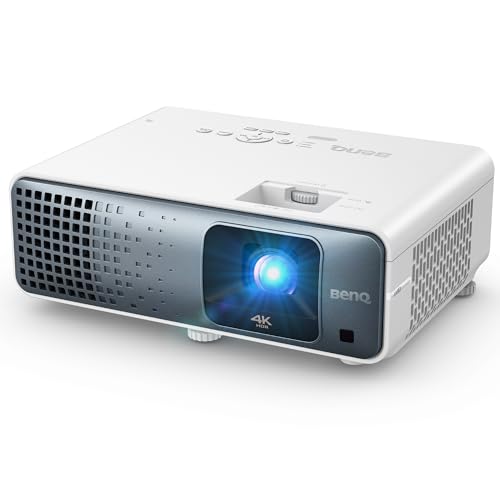
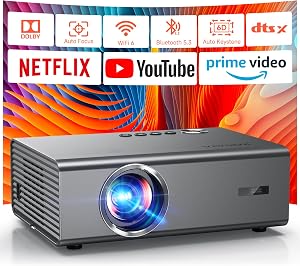
- BRIGHTEN YOUR LIVING ROOM: This Tv projector is great addition to your home theater set up. Experience movies and games with lights on, with a 3200 ANSI lumens laser light source
- DURABLE LASER LIGHT SOURCE: Enjoy superior saturation and vibrant colors while eliminating the hassle of frequent lamp replacements
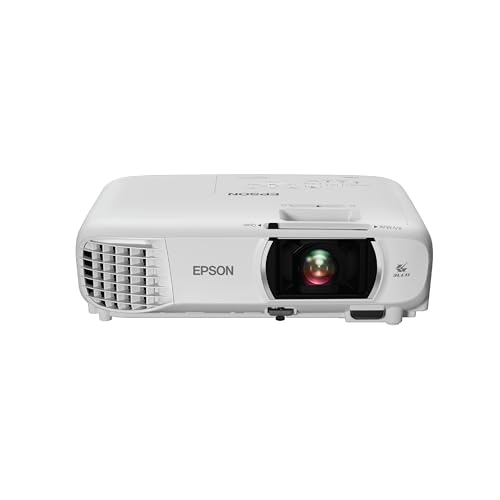
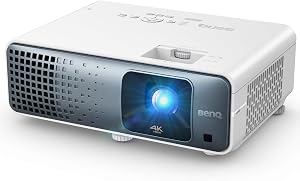
- Exceptional Picture Quality — Provides stunning, detailed 1080p images and fast data processing that’s optimized for fast-action sports, gaming and more
- Ultra Bright Images — 3,400 lumens of color brightness (IDMS rated) and 3,400 lumens of white brightness (ISO rated)¹ deliver outstanding-quality images in a variety of lighting
![[Bundled with Google TV Stick] Smart Projector with WiFi and Bluetooth](https://projvue.com/aimg/images/I/51vPNfwQyDL._SL500_.jpg)
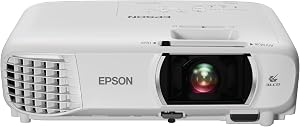
- 【Smart Streaming via Google TV & Voice Assistant】: Get instant access to Netflix, YouTube, and 10,000+ apps all integrated on one simple home screen, with no external device
- 【Bright 3000 ANSI | Crisp 4K Decoding Supported Projection】: This projector features native 1080P resolution with 4K decoding support and 3000 ANSI Lumens, delivering razor-sharp
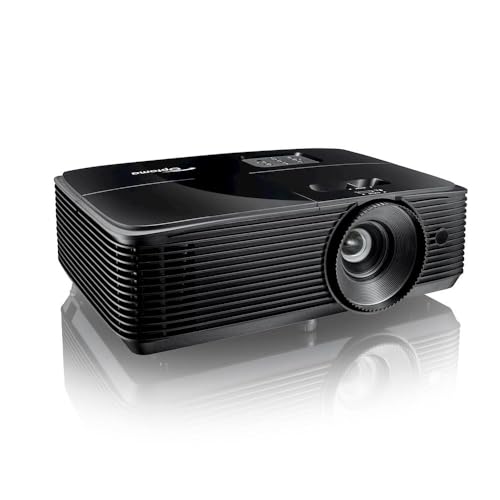
- Game Display Mode
- Easy Installation
Why This Guide Exists (And Why You're Probably Frustrated Right Now)
Figuring out how to connect surround sound to a projector is the single biggest headache most people hit when they make the leap from a flat-screen TV to a true projection setup. I learned this the hard way after spending two full weekends rewiring my basement theater last spring, fighting handshake dropouts, lip-sync delays, and one truly humiliating moment when my $1,400 receiver decided it couldn't "see" any speakers at all.
The good news? Once you understand the underlying logic, every connection method becomes obvious.
The bad news? Almost every guide online skips the part where they explain why certain setups fail.
That ends today.
What You'll Master In The Next 18 Minutes
- 01.The 4 connection methods, ranked by sound quality and ease
- 02.The exact wiring diagrams I use in my own theater
- 03.How to eliminate lip-sync issues in under 60 seconds
- 04.The 7 most common mistakes (and how to avoid every one)
- 05.Budget vs. premium gear recommendations that actually deliver
Below, I'll walk you through every connection method I've personally tested over the past 18 months of constantly tearing down and rebuilding my own setup, including the exact cables, settings, and troubleshooting tricks that turned my room from a frustrating mess into something that genuinely rivals a commercial theater.
Watch This First: A Complete Visual Walkthrough
Before you touch a single cable, spend a few minutes with this hands-on tutorial. Seeing the connections made in real time saves an enormous amount of trial-and-error.
Why Your Projector's Built-In Speakers Are Sabotaging Your Movie Nights
Here's the uncomfortable truth: projectors are video devices first, second, and third. Audio is an afterthought for the entire industry.
Most projectors ship with a tiny 3-watt to 10-watt internal speaker that sounds, generously, like a clock radio from 1997 buried under a couch cushion. Even high-end models boasting 20-watt Harman Kardon drivers physically cannot reproduce the chest-rattling thump of an explosion or the precise spatial cues that make Dolby Atmos feel like rain falling around you.
> Pull Quote: "Pairing a $3,000 projector with built-in speakers is like buying a Ferrari and refusing to put gas in it. You'll never feel what it can actually do."
The 4 Connection Methods, Ranked From Best To Worst
There are exactly four legitimate ways to route audio from your projector setup to a surround sound system. Each has a sweet spot, and each has a trap that catches first-timers.
Method 1: AV Receiver as the Central Hub (The Gold Standard)
This is the setup professional installers use 95% of the time, and it's what I run in my own theater. Every source (Blu-ray player, Apple TV, gaming console, cable box) plugs into the HDMI inputs on your AV receiver. The receiver then sends a single HDMI cable carrying pure video to your projector while routing the audio to all your speakers.
If your projector ceiling-mount is more than 25 feet from your receiver, skip standard HDMI entirely. Use a certified fiber optic HDMI cable rated for 8K/48Gbps. It eliminates 100% of the signal-degradation problems that plague long copper runs.
Method 2: HDMI ARC / eARC (The Modern Shortcut)
If your projector supports HDMI ARC (Audio Return Channel) or eARC, you can run a single HDMI cable between the projector and receiver that carries video in one direction and audio back the other. This dramatically simplifies the wiring.
The catch? Most projectors under $2,000 don't actually support full eARC. Always verify in the spec sheet, never the marketing page.
Method 3: Optical (Toslink) Audio Out
Nearly every projector has a digital optical output. This works, but it's bandwidth-limited and can't carry Dolby Atmos or DTS:X. You'll get stereo or compressed 5.1 surround at best.
Method 4: 3.5mm Analog Out (The Last Resort)
Use this only when nothing else is available. You'll get noticeable signal loss, a higher noise floor, and zero high-resolution audio support.
Have a modern AV receiver? Use Method 1. No receiver but a soundbar with eARC? Use Method 2. Older gear or zero budget? Use Method 3. Only consider Method 4 in absolute emergencies.
The Exact Wiring Diagram I Use In My Own Theater
Let me walk you through my personal setup, screw-by-screw, so you can copy it exactly:
- Sources In — PS5, Apple TV 4K, and a Panasonic UHD Blu-ray player all plug into HDMI inputs 1, 2, and 3 on a Denon AVR-X3800H.
- Receiver to Projector — A 35-foot Monoprice SlimRun AV fiber optic HDMI cable runs from the receiver's HDMI OUT (Monitor 1) to the projector's HDMI 1 input.
- Receiver to Speakers — 12-gauge in-wall-rated speaker wire feeds a 7.1.4 Klipsch Reference Premiere setup with two SVS PB-1000 Pro subwoofers.
- Network — The receiver is hardwired to the router via Ethernet for Audyssey calibration and firmware updates.
↓
[AV Receiver - Decodes Audio]
↓ (video only) ↓ (audio)
[Projector] 7.1.4 Speakers
Killing Lip-Sync Issues In 60 Seconds Flat
The most frustrating problem after a fresh install: actors' mouths moving slightly out of sync with their voices. It's maddening, but the fix is almost always a single setting tweak.
On your receiver, find the menu labeled Audio Delay, Lip Sync, or A/V Sync. Start at 80ms and adjust in 10ms increments while watching a close-up dialogue scene.
Projectors introduce latency because video signal processing takes longer than audio processing. You're not imagining it.
Pro Installer Walkthrough: Getting Atmos Right
If you're stepping up to Dolby Atmos, this next video is essential viewing. It covers ceiling speaker placement, calibration, and how to verify your signal is actually arriving as Atmos and not downmixed.
The 7 Mistakes That Will Wreck Your Setup
After helping dozens of friends, family, and readers debug their setups, the same handful of mistakes appear over and over. Avoid these and you'll skip 90% of the pain.
Budget Versus Premium: What Actually Delivers
Under $1,500 Total
- Denon AVR-S670H receiver
- Polk Signature Elite 5.1 package
- Monoprice 25ft fiber HDMI
- Klipsch R-100SW subwoofer
$5,000 to $8,000
- Denon AVR-X3800H or Marantz Cinema 40
- SVS Prime Pinnacle 7.1.4 setup
- Dual SVS PB-1000 Pro subwoofers
- Certified 8K fiber HDMI throughout
Frequently Asked Questions
Get the Wiring Right Once. Enjoy It For Years.
A great projector deserves great sound. Spend the extra hour on proper wiring and calibration today, and every movie night from here on will feel like a premium event — not a tech support call waiting to happen.
Key Takeaways
- Choosing the right how to connect surround sound to projector means matching the key features to your specific needs and budget
- Read real customer reviews and check the return policy before you commit
- Also covers: projector audio output
- Also covers: hdmi arc projector receiver
- Also covers: projector speaker setup
- Compare value across models — the priciest option is not always the best fit


