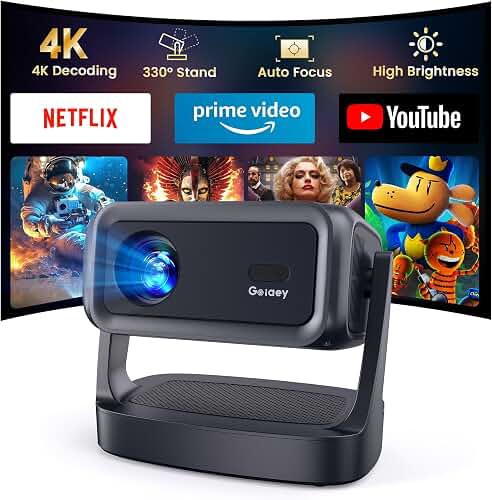
Comparison: UST vs short-throw vs portable for container builds
| Category | Typical throw ratio | Throw for 100″ screen | Brightness range | Best for | Trade-off |
|---|---|---|---|---|---|
| Ultra-short-throw laser | 0.21–0.30:1 | 15–22 inches | 2,400–3,500 ANSI | Permanent container theater on a credenza | Higher upfront cost; demands flat wall or ALR screen |
| Short-throw lamp/LED | 0.45–0.80:1 | 3.5–6.5 feet | 2,000–3,200 ANSI | 40-ft containers with shelf or pole mount | Eats some floor depth; fan noise in small space |
| Portable LED/laser | 1.2–1.4:1 | 9–11 feet | 400–1,200 ANSI | Off-grid weekenders, outdoor projection too | Brightness fails with any ambient light |
Choosing the best projector for shipping container tiny home conversion comes down to three constraints unique to the space: short throw distance (often 8–12 feet maximum), 8-foot ceilings, and limited wall area competing with windows and storage. For most container builds, an ultra-short-throw (UST) laser projector mounted on a low credenza is the winning answer — it can throw a 100-inch image from less than 18 inches away, eliminates ceiling-mount headaches in corrugated steel, and integrates cleanly into a dual-purpose living/sleeping space. In this 2026 buyer's guide we walk through the exact specs that matter for container conversions, the math behind throw distance, and the trade-offs between UST, short-throw, and portable picks.
Why a shipping container needs a different kind of projector
A shipping container is not a standard living room. A 20-foot container gives you roughly 160 square feet of interior floor space and a width of just under 8 feet. A 40-foot high-cube doubles the length but the width and ceiling height remain restrictive. That has a few immediate consequences for projector selection.
The best best projector for shipping container tiny home for your situation depends on how you plan to use it and where.
- Throw distance is brutal. A standard long-throw projector needs 10–14 feet to fill a 100-inch screen. In a container, you simply don't have it.
- Ceiling mounts are messy. Corrugated steel ceilings make traditional ceiling mounting both difficult (you need spray-foam-friendly anchors) and noisy (vibration transfer).
- Ambient light is unpredictable. Containers often have one or two large picture windows and reflective metal walls. A 1,500-lumen budget unit gets washed out fast.
- Power may be constrained. Many container conversions run off a solar bank with limited continuous wattage. A 300W bulb projector eats your battery; a 100W laser unit does not.
The best projector for shipping container tiny home setups solves all four of those problems at once. That almost always means a laser light source, a short or ultra-short throw ratio, and an integrated smart OS so you don't need a separate streaming box on the cramped wall.
Throw distance math for 20ft and 40ft containers
Before anything else, measure the wall you intend to project onto and the deepest furniture position opposite it. In a typical 20-foot container with a queen Murphy bed on one end and a sofa wall on the other, your maximum throw distance is roughly 11–13 feet. In a 40-foot container divided into living and bedroom zones, the living-area throw distance is usually 9–14 feet depending on partition placement.
Match that against the projector throw ratio. A 0.25:1 ultra-short-throw can fill a 100-inch screen from about 15–18 inches away. A 0.5:1 short-throw needs roughly 4 feet. A 1.5:1 standard-throw needs around 11 feet for the same image. If you want a deeper dive into the geometry, our projector throw distance guide walks through the formulas and includes a calculator for non-standard rooms.
Brightness: how many lumens you actually need
Container interiors are tricky because the matte-painted plywood ceiling absorbs light while polished steel accents and large windows reflect it. For a 100-inch screen used at night with blackout curtains, 1,800–2,200 ANSI lumens is plenty. For mixed daytime use without true blackout shades, plan on 2,500–3,500 ANSI lumens. Anything above 3,500 ANSI lumens is overkill for a container and just wastes wattage. Our guide to lumens for home theater breaks down ANSI vs. marketing lumens, which is critical because container-builder forums are full of misleading spec sheet numbers.
Mounting options when ceilings are corrugated steel
You have three realistic mounting paths in a container conversion:
- Credenza placement (UST). A console table 14–20 inches deep sits against the screen wall. The projector lives on top, throws upward and outward. This is the cleanest install and gives you a furniture piece that doubles as storage.
- Shelf mount (short-throw). A floating shelf at the back of the container holds a 0.5:1 short-throw projector aimed forward. You lose 4 feet of floor depth but gain a smaller projector footprint.
- Ceiling mount with a furring channel. If you must ceiling-mount, install 2x4 furring strapped across the container ribs first, then anchor the mount into the wood. Lag bolts directly into corrugated steel will work loose over time.
What to look for in 2026
1. Laser light source (not lamp)
Lamps die at 3,000–5,000 hours and cost $80–$200 to replace. In a container that is also your bedroom, you watch a lot of evening content. A laser unit gives you 20,000–25,000 hours and runs cooler — meaningful when your interior volume is 1,200 cubic feet and you don't want a heater under the screen. Our roundup of the best laser projectors is the right place to start narrowing brands.
2. Native 4K or pixel-shifted 4K
At a typical container viewing distance of 8–10 feet from a 100-inch screen, the angular resolution makes 4K visibly sharper than 1080p. Pixel-shifted 4K (XPR or similar) is usually fine; you don't need a $4,000 native-4K reference projector here.
3. Built-in smart OS and Wi-Fi 6
Storage is at a premium in a container. A projector with Google TV, Android TV, or a comparable platform baked in eliminates the need for an Apple TV or Fire Stick on the wall. Wi-Fi 6 matters if you're streaming over a Starlink dish, which has become common in off-grid container builds.
4. Power draw under 150 watts
Check the spec sheet for typical (not peak) power draw. A 110W laser projector is friendly to a 2,000Wh solar system; a 280W lamp projector is not.
5. Audio out that matches your build
Container theater audio usually means either a soundbar mounted under the screen or compact bookshelf speakers tucked into shelving. Look for eARC HDMI, Bluetooth 5.x, and an optical out. Our walkthrough on how to connect a soundbar to a projector covers the lag-free options that matter for movies and gaming.
6. Auto keystone and auto focus
Containers settle. A projector that re-squares the image automatically after the build flexes through a seasonal temperature swing saves you from quarterly recalibration.
Screen choice in a metal-walled space
You have three options. The cheapest is painting a section of wall with high-quality projector paint — works fine in a 20-foot container with limited window light. The middle option is a fixed-frame ALR (ambient light rejecting) screen, which dramatically improves daytime viewing when paired with a UST. The premium option is a motorized drop-down screen that retracts into a ceiling pocket above the container ceiling joists, freeing the wall for a wall-bed configuration.
Off-grid considerations
If your container is on a remote parcel with solar plus batteries, do the watt-hour math. A 110W laser projector running 3 hours/night consumes ~330 Wh. Pair that with your fridge (~700 Wh/day) and lighting and you can see why every watt matters. Avoid lamp-based projectors that draw 250–300W; they will repeatedly trip a small inverter and chew through your bank.
Similar builds and adjacent guides
Many of the same constraints — low ceilings, short throw, dual-use space — apply to finished basement theaters. Our guide to the best projector for finished basements with 8-foot ceilings covers many of the same models that work in container builds. For tight rooms generally, the best short-throw projectors list is the most directly transferable shortlist for container conversions.
Frequently Asked Questions
Can I use an ultra-short-throw projector in a 20-foot shipping container?
Yes — in fact a UST is usually the best choice for a 20-foot container. The cabinet sits against the end wall on a credenza about 15–20 inches deep, and you get a 100-inch image without losing any usable floor space. The only requirements are a flat (not corrugated) interior wall surface or a fixed ALR screen, and a level credenza so the auto-trapezoid correction doesn't have to work overtime.
What is the best projector for a tiny home with 8-foot ceilings?
For 8-foot ceilings, prioritize either a UST that sits below the screen on furniture or a short-throw with a wall mount placed 4–5 feet back. Avoid traditional ceiling mounts on standard-throw projectors — the lens needs to clear the seated viewer's head, and you'll end up with the image tilted and keystoned. The same principles covered in our low-ceiling projector guide apply directly to container builds.
How do I mount a projector to a corrugated steel ceiling?
You don't mount directly to corrugated steel. Install horizontal wood furring (typically 2x4s) across the steel ribs first, anchored with self-tapping metal screws. Then mount the projector bracket into the wood. This spreads the load, dampens vibration that would otherwise transmit through the steel as audible buzz, and gives you a flat reference surface for leveling.
How many lumens do I need for a shipping container theater?
For a 100-inch screen used after dark with curtains drawn, 1,800–2,200 ANSI lumens is the sweet spot. For mixed-light daytime viewing, target 2,500–3,500 ANSI lumens. ANSI lumens is the spec that matters — marketing or “light source” lumens can be 3x inflated. See our lumens guide for the conversion math.
Will a projector overheat inside an insulated shipping container?
Not if you ventilate properly and use a laser-based unit. Containers retain heat aggressively in summer, but modern laser projectors run 30–40°F cooler than lamp models. Keep at least 6 inches of clearance behind the exhaust vents, run a small ceiling fan during use, and avoid placing the projector in direct sunlight from a skylight.
Can I run a 4K projector off a solar power system?
Yes, with the right model. A laser 4K projector typically draws 90–140 watts in normal viewing mode. A 2,000Wh battery bank handles roughly 14–20 hours of viewing per full charge, depending on brightness setting and your other loads. Lamp-based 4K projectors at 250W+ are a much harder fit for off-grid setups — possible, but you're sizing the system around the projector.
What's the cheapest path to a good container theater in 2026?
The cost-effective build is a sub-$1,500 short-throw 4K laser projector, a wall painted with screen paint, and a soundbar with HDMI eARC. That gets you a 100-inch image with respectable contrast and Atmos-capable sound for under $2,000 total. If budget allows another $1,500–$2,000, stepping up to a UST with an ALR screen is the single biggest quality jump for a container build.
Do I need a special screen or will the container wall work?
A smooth, primed-and-painted interior wall using dedicated projector paint will produce a watchable image in a dark container. For UST projectors, an ALR (ambient light rejecting) screen is strongly recommended because UST units throw light upward and benefit hugely from a screen designed to reject overhead room light. For standard short-throws, a basic matte white fixed-frame screen is fine.
Key Takeaways
- Choosing the right best projector for shipping container tiny home means matching the key features to your specific needs and budget
- Read real customer reviews and check the return policy before you commit
- Also covers: shipping container home projector setup
- Also covers: tiny home projector low ceiling
- Also covers: container home theater projector
- Compare value across models — the priciest option is not always the best fit