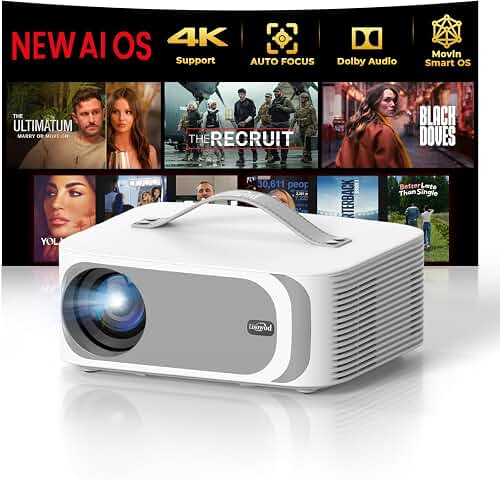
For a bedroom where you only have about ten feet of distance between the projector lens and the wall, you need a short-throw model with a throw ratio of roughly 0.5:1 to 1.0:1. The best short throw projector small bedroom 10 feet setups need will produce a 100-inch image from 5–8 feet, deliver at least 2,000 ANSI lumens for evening viewing, and include vertical lens shift or generous keystone correction to handle tight ceiling mounts. Native 1080p is the minimum in 2026, though 4K HDR is strongly recommended if you watch movies more than you game.
Why throw distance dictates everything in a small bedroom
Most American bedrooms measure between 10 and 12 feet across the longest wall. After you subtract the foot of clearance behind the projector (for ventilation and cable bend radius) and the few inches in front of the screen, you are realistically working with 8 to 9 usable feet of projection throw. A standard-throw projector with a 1.5:1 ratio needs roughly 12 feet to fill a 100-inch screen — which means in a small bedroom you would either be stuck with a tiny 60-inch image or have to mount the projector behind your headboard. Neither is acceptable, which is why short-throw optics are the only practical choice.
When shopping for best short throw projector small bedroom 10 feet, it pays to compare specs, capacity, and real-world runtime before committing.
Throw ratio is simply distance divided by screen width. A 1.0:1 lens needs one foot of distance per foot of screen width. A 100-inch diagonal screen is about 87 inches (7.25 feet) wide, so a 1.0:1 short-throw lens needs about 7 feet 3 inches of throw to fill it. That fits comfortably inside a 10-foot wall-to-wall measurement with room to spare for a nightstand or dresser underneath.
Understanding throw ratio for under-10-foot rooms
Projectors fall into three broad categories based on throw ratio:
- Ultra-short-throw (UST), 0.25:1 and below. These sit on a console directly beneath the screen and project upward. They produce a 100-inch image from roughly 6 inches of distance, but cost considerably more and are extremely sensitive to wall flatness and ambient light bouncing off the floor.
- Short-throw, 0.5:1 to 1.0:1. The sweet spot for a small bedroom. These deliver 100 inches from 4 to 7 feet, fit on a small shelf, and cost a fraction of UST units while still avoiding the long-throw mounting headaches.
- Standard-throw, 1.2:1 and above. Anything in this range will force you into a 70-inch image or smaller in a 10-foot room. Avoid these unless you are willing to tabletop-mount very close to your eye line.
If you want a deeper dive into the math behind the lens spec, our projector throw distance guide walks through every ratio with worked examples and includes a downloadable calculator.
What screen size can you realistically fit?
A common mistake is buying the largest image the projector can produce instead of the largest image the room can comfortably display. SMPTE and THX both recommend a viewing distance of roughly 1.2 to 1.5 times the screen width for movies, and 1.5 to 2 times for mixed TV and gaming use. In a small bedroom where your bed sits 8 to 9 feet from the wall, that math points to a 90 to 110-inch diagonal screen — coincidentally exactly what a quality short-throw projector excels at.
Pushing past 120 inches in a 10-foot room means your eyes have to constantly scan corner to corner, you will notice every pixel structure flaw, and skin tones will look uncannily oversized in close-ups. A 100-inch image is the practical maximum for the best short throw projector small bedroom 10 feet of throw can support without compromising image quality or comfort. Our throw distance and screen size guide pairs this math with seating layouts.
Key specs to prioritize for a small bedroom
Brightness: 2,000–3,000 ANSI lumens
Bedrooms are usually viewed at night with blackout curtains, but a small room amplifies any stray light from a bathroom door or smoke detector LED. Look for at least 2,000 ANSI lumens (not the inflated "LED lumens" or "light source lumens" figures marketing teams love). 2,500 ANSI is the comfortable target for a 100-inch image; above 3,500 ANSI you risk eye fatigue in a dark room unless the projector has a generous iris range.
Native resolution: 1080p minimum, 4K preferred
The closer you sit, the more pixel structure matters. At 8 feet from a 100-inch screen, a 1080p image still looks sharp, but you will see the screen door on text-heavy content like menus or web browsing. A native 4K or pixel-shift 4K chip largely eliminates this. If you cannot stretch the budget for 4K, prioritize 1080p with strong scaling over "1080p-supported" 720p chips.
Lens shift and keystone
In a small bedroom, you rarely get to mount the projector at the optical centerline of the screen. Vertical lens shift (a physical optical adjustment) preserves image quality; digital keystone correction works in a pinch but crops resolution and softens edges. At minimum, look for ±15% vertical lens shift, or accept that you will lose some pixels to keystone.
HDR support and contrast
HDR10 is now table stakes in 2026. Look for a native contrast ratio of at least 2,000:1 — anything lower will produce washed-out blacks in a dark bedroom, which is exactly the environment that exposes weak contrast. Laser light sources generally outperform UHP lamps for dynamic contrast.
Fan noise
This spec is criminally underreported. A bedroom projector sits 6 feet from your head. Anything above 30 dB at normal brightness becomes intrusive during quiet dialogue scenes. Check independent reviews for measured fan noise, not the manufacturer's eco-mode-only spec.
Placement and mounting in a small bedroom
You have three realistic placement options in a 10-foot bedroom:
- Ceiling mount above the foot of the bed. Cleanest look, hides cables, and keeps the projector out of the way. Requires running power and HDMI through the ceiling. Our ceiling mount walkthrough covers the joist work and cable routing.
- Rear shelf or bookcase. Easy to install, no permanent modification, but you must commit to a fixed shelf height that matches the projector's lens shift range.
- Tabletop or dresser placement. Works for a true short-throw under 1.0:1 because the projector can sit only a few feet from the screen, but watch for hot exhaust air being directed at fabric or curtains.
Whichever option you pick, measure twice. Use a tape measure to mark the projector's final position, then verify the throw distance matches the lens range published in the manual before drilling anything.
Ambient light and the bedroom reality
Even with blackout curtains, a small bedroom has a lot of reflective surfaces close to the screen: mirrors, glossy dressers, painted walls. A matte white screen with a 1.0 gain works for fully dark viewing, but if you ever watch with a hallway light on, look at a 0.8-gain gray screen or an ambient-light-rejecting (ALR) screen designed for short-throw geometry. Our screen selection guide details the trade-offs.
One overlooked tweak: paint the ceiling above the screen flat black for a foot or two, or hang a dark fabric strip. Light bouncing off a white popcorn ceiling onto the screen kills perceived contrast more than any spec sheet number.
Sound considerations in a small room
Most short-throw projectors include built-in speakers that range from acceptable to abysmal. In a small bedroom the speakers are physically closer to you, which masks some weakness, but you will still want external audio for movies. A compact soundbar mounted under the screen is the easiest upgrade and bypasses the projector's tinny drivers entirely. Walk through the wiring in our soundbar connection guide.
Budget guidance for short-throw in 2026
Short-throw optics carry a premium of roughly $200–$400 over equivalent standard-throw models because the lens elements are more complex. Realistic 2026 price bands:
- $500–$800: 1080p short-throw with LED light source, decent for casual viewing, weak HDR.
- $900–$1,500: Native 4K or pixel-shift 4K, 2,500+ ANSI lumens, real HDR10, proper lens shift. The sweet spot for most small bedrooms.
- $1,800 and up: Laser light source, wider color gamut (BT.2020 coverage), longer light-source lifetime (20,000+ hours), quieter fans.
Below $500 you are mostly buying re-badged generic LCD panels with overstated specs. Above $2,500 you start hitting diminishing returns unless you are also upgrading to an ALR screen.
Step-by-step setup checklist
Once you have chosen the best short throw projector small bedroom 10 feet limits allow, follow this order to avoid rework:
- Mark the screen position on the wall and confirm it matches your sightline from the bed.
- Measure throw distance from the screen to your intended mount point and verify it falls inside the projector's published range.
- Mount or place the projector with the lens centered horizontally on the screen.
- Adjust vertical lens shift before touching any digital keystone.
- Run focus on a static test pattern, not live content.
- Calibrate brightness and contrast using a free pattern set before fine-tuning color.
The full walkthrough lives in our home theater projector setup guide.
Frequently Asked Questions
What throw ratio do I need for a 100-inch screen in a 10-foot bedroom?
You need a throw ratio of approximately 0.9:1 or shorter to fill a 100-inch diagonal screen from a wall 10 feet away after accounting for projector body depth and rear clearance. A 0.5:1 lens would let you mount even closer, around 4 feet from the screen, which is ideal if you want to place the projector on a dresser at the foot of the bed.
Can I use a UST projector in a small bedroom instead of a short-throw?
Yes, but the trade-offs are real. UST units sit on furniture directly below the screen, eliminating ceiling-mount work entirely, and they handle 100-inch images from less than a foot of distance. The downsides are higher cost (typically $1,500+), strict wall-flatness requirements, and the need for a UST-specific ALR screen to control floor-bounce light. For a small bedroom under 10 feet, a traditional short-throw is usually a better value.
How many lumens do I need for a small dark bedroom?
2,000 ANSI lumens is the practical minimum for a 100-inch image in a fully dark bedroom; 2,500 ANSI is the comfortable target that gives you headroom for HDR highlights without forcing you into an overly bright eco mode. Going above 3,500 ANSI in a small dark room can cause noticeable eye fatigue. Our lumens guide breaks it down by room type.
Is 4K worth it on a 100-inch screen viewed from 8 feet away?
Yes. The 20/20 vision resolving limit at 8 feet from a 100-inch screen is roughly 1080p, but real-world content benefits from 4K through better edge definition, finer film grain reproduction, and HDR metadata that 1080p chips cannot fully unpack. Pixel-shift 4K models hit a strong price-performance sweet spot in 2026.
Will keystone correction hurt image quality?
Digital keystone correction crops resolution and softens edges because it resamples pixels to simulate a geometric correction the lens cannot do optically. Mild keystone (under 5 degrees) is generally invisible; aggressive keystone (15 degrees or more) produces visible softness, especially on text. Always prioritize physical lens shift and proper mounting placement first, and reserve keystone for fine-tuning.
What is the quietest short-throw projector for a bedroom?
Look for measured fan noise under 28 dB in normal mode. Laser-light-source units generally run quieter than UHP lamp models because they do not need an aggressive lamp cooling cycle. Reading independent reviews is essential here, since manufacturer specs almost always cite eco mode at minimum brightness — a number you will rarely actually use.
Can I mount a short-throw projector behind the bed?
Only if the throw ratio truly is short enough. A 0.5:1 model behind a bed roughly 8 feet from the wall would produce a 192-inch image — far too large. A short-throw projector behind the bed only makes sense if the bed is unusually close to the screen (under 5 feet), which is rare. The standard layout is to mount the projector roughly above the foot of the bed, projecting forward onto the wall opposite the headboard. For more layout options, see our short-throw home theater roundup.
Key Takeaways
- Choosing the right best short throw projector small bedroom 10 feet means matching the key features to your specific needs and budget
- Read real customer reviews and check the return policy before you commit
- Also covers: short throw projector 100 inch 8 feet bedroom
- Also covers: best projector tiny bedroom wall mount
- Also covers: compact short throw projector studio apartment
- Compare value across models — the priciest option is not always the best fit