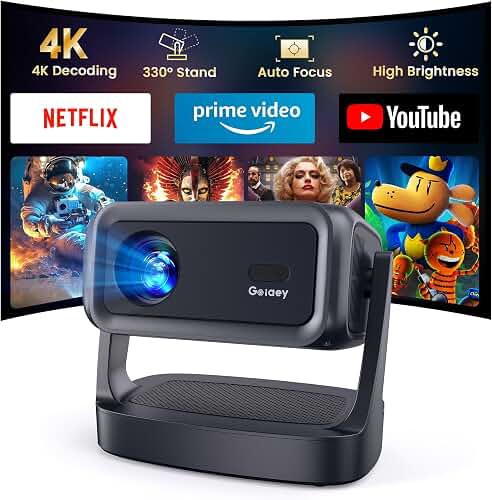
The best projector for converted garage home theater with concrete floors is a sealed, high-lumen (2,500–3,500+ ANSI) laser model with a flexible throw range, generous lens shift, and an IP-rated or filtered intake to handle dust, temperature swings, and the cool reflective acoustics that bare concrete creates. Garages typically have higher ambient light leakage around roll-up doors, longer-than-average throw distances, and zero acoustic absorption underfoot, so you need brightness, contrast, and installation flexibility that a standard living-room projector simply can’t deliver. This 2026 buyer’s guide breaks down every spec that actually matters for a concrete-floor garage build, plus the practical setup gotchas no one warns you about.
Why a Garage Conversion Demands a Different Kind of Projector
A converted garage isn’t a basement, isn’t a living room, and definitely isn’t a dedicated home cinema. It’s a hybrid space with structural quirks that punish the wrong projector choice. Concrete floors store and release heat, sweat in humid weather, reflect high-frequency sound, and transmit vibration. Garage doors, even when sealed, leak ambient light through perimeter gaps. Insulation is often retrofitted and incomplete, meaning summer temperatures can climb above 95°F and winter nights can drop below freezing.
When shopping for best projector for converted garage home theater, it pays to compare specs, capacity, and real-world runtime before committing.
The right projector has to tolerate all of that while still delivering a punchy, cinematic image. That means rethinking three categories most buyers overlook: thermal envelope, light output versus reflected glare, and installation geometry in a room that was never designed for seating sightlines.
Lumens: How Bright Is Bright Enough?
The single biggest mistake garage theater builders make is under-buying on brightness. A typical living-room projector rated at 2,000 ANSI lumens looks fantastic at night with curtains drawn. Drop that same unit into a garage where light bounces off pale concrete, exposed drywall, and the gloss-white underside of the garage door, and the image goes flat fast.
For a converted garage with concrete floors, aim for:
- 2,500–3,000 ANSI lumens if you’ve painted the floor matte charcoal or dark gray and sealed the door perimeter with weatherstripping and blackout cloth.
- 3,000–3,500 ANSI lumens if the floor is bare concrete or epoxy with any sheen, or if the door admits daylight.
- 3,500+ ANSI lumens if you also use the space for daytime sports or gaming with the door cracked for ventilation.
If you’re unsure how to translate manufacturer claims into real-world output, our projector lumens guide and how-many-lumens deep-dive walk through ANSI versus marketing “LED lumens” numbers so you don’t overpay for inflated specs.
Why Laser Beats Lamp in a Garage Build
Lamp-based projectors are cheaper up front, but they hate three things garages do constantly: thermal cycling, dust, and being switched on cold. Lamp ignition draws hundreds of watts and stresses the bulb every cold start. In a 40°F winter garage, that shortens lamp life dramatically—sometimes from a rated 5,000 hours down to 1,500 or less.
Laser light engines, by contrast, fire up instantly, tolerate cold starts, run cooler at the source, and typically deliver 20,000–30,000 hours of usable life. For a space that may sit unused for weeks then run a marathon weekend movie session, laser is the clear long-term value. Pure laser, laser-phosphor, and tri-laser RGB units all qualify; the tri-laser units add wider color gamut at a price premium.
Throw Distance and Lens Shift in a Long, Narrow Space
Most one-car garages run 18–22 feet deep and 10–12 feet wide. Two-car garages stretch 20–24 feet deep and 18–22 feet wide. That depth is a gift for traditional long-throw projectors—you can hit a 120-inch screen from the back wall comfortably—but only if your unit’s throw ratio matches the geometry.
Before buying anything, calculate the actual usable throw distance from your planned mount point to your planned screen wall, accounting for any seating risers or rear-wall cabinetry. A 1.2–1.6 throw ratio works for most two-car garages with 120-inch screens; one-car garages may need a 1.0–1.3 ratio or a short-throw model.
Our throw distance guide includes the formula and a lookup table for common screen sizes. Pair it with vertical and horizontal lens shift, because a concrete ceiling rarely lets you mount exactly where the math says you should—you’ll be working around joists, conduit, and existing garage door track hardware.
Dust, Heat, and the Sealed-Optics Question
Garages are dustier than any other room in a house. Sawdust from a workbench, brake dust tracked in from the driveway, and HVAC particulates all settle on horizontal surfaces. A projector with an unsealed light path will accumulate dust on the DMD chip, color wheel, or LCD panels within a single season, producing visible dark spots and warm zones in the image.
Look for projectors that explicitly advertise:
- Sealed optical engines (common on premium laser models)
- Replaceable or washable intake filters
- Operating temperature ranges that extend to at least 95°F (35°C), with some quality units rated to 104°F
- Cold-start tolerance down to 41°F (5°C) or lower
If your candidate projector’s spec sheet is vague about any of these, treat that as a warning sign. Garage conditions will find the weakness.
Mounting on a Concrete or Stick-Built Garage Ceiling
Garage ceilings vary wildly. Detached garages often have exposed trusses with no drywall. Attached garages typically have drywall over standard 24-inch-on-center joists. Some older garages have poured concrete or cinderblock soffits. Each demands a different mounting strategy.
For drywall over wood joists, use a universal projector mount anchored into a joist with lag bolts—never toggle bolts alone. For concrete ceilings, you’ll need a hammer drill and concrete anchors rated for the projector’s weight plus a 4x safety margin. Exposed trusses are actually the easiest case: bolt directly through the chord into a backer plate.
Our ceiling mount walkthrough covers each scenario, including how to run HDMI and power through conduit so the install passes inspection if your garage conversion was permitted.
Acoustics: Why Concrete Floors Wreck Your Soundtrack
This is the section every garage theater article skips, and it’s the one that will quietly ruin your build if you ignore it. Concrete floors are acoustically “hard”—they reflect nearly 100% of incident sound energy back into the room. Combined with drywall walls and a flat ceiling, you get a reverberant box where dialogue smears, gunshots sound metallic, and surround imaging collapses.
Fixes, in order of impact per dollar:
- A large area rug with a thick pad covering at least 60% of the floor under seating. This alone can drop reverb time by 30–40%.
- First-reflection absorption panels on side walls at ear height when seated.
- Heavy blackout curtains across the garage door opening—they kill light leakage and act as a massive bass trap.
- Bookshelves or upholstered furniture on the back wall to scatter rear reflections.
None of this changes your projector choice, but it dramatically affects how your speakers should be configured. See our guide on connecting surround sound to a projector for the wiring side, especially the discussion of audio delay—a long HDMI run from a rear-mounted projector back to a front-of-room AVR can introduce lip-sync issues if not handled correctly.
Resolution, HDR, and Contrast in a Bright Room
Native 4K (3840×2160) is now the baseline at most price points above $1,200. Pixel-shifted 4K (1080p chips that shift to display a 4K signal) is acceptable below that. Either looks excellent on a 100–120-inch garage screen viewed from 12–14 feet.
HDR support matters more than you’d expect in a garage. Because ambient light raises the noise floor of dark scenes, HDR’s expanded specular highlights are what give shadow detail visible punch. Look for HDR10 at minimum; HDR10+ or Dolby Vision is a nice bonus but rarely a deal-breaker.
Native contrast (not “dynamic contrast” marketing numbers) is what determines whether dark scenes look like deep velvet or gray fog. In a garage with imperfect light control, anything above 2,000:1 native is usable; 5,000:1 or higher is genuinely good.
Screen Choice: ALR Is Worth the Premium
An ambient-light-rejecting (ALR) screen is the single most impactful upgrade you can make to a garage theater after the projector itself. ALR materials use micro-louvered or angular-reflective surfaces to bounce overhead and side ambient light away from the viewer while reflecting the projector’s on-axis light back. The result: blacks stay black even with some room light, and contrast jumps noticeably.
For garages, pair an ALR screen with a long-throw projector mounted at the rear. Short-throw ALR pairings exist but cost significantly more and are finicky about geometry. Our screen selection guide covers gain, viewing angle, and ALR variants in depth.
Power, Cabling, and Climate Control
Three practical items that catch DIY garage theater builders off guard:
- Dedicated 20A circuit: A 3,000-lumen laser projector plus an AVR plus a subwoofer can pull 8–12 amps. Sharing a circuit with the garage door opener or a freezer causes voltage sag and brownout shutdowns mid-movie.
- In-wall or surface conduit: Run HDMI, network, and power separately. HDMI longer than 25 feet should be active optical (AOC) rather than passive copper.
- Insulation and a mini-split: R-13 batts in the walls, R-30 in the ceiling, and a 9,000–12,000 BTU mini-split heat pump keeps the space at projector-safe temperatures year-round. This is non-negotiable for laser life and image stability.
Putting It All Together
The best projector for converted garage home theater builds isn’t a single model—it’s a set of specifications matched to your specific garage. A two-car garage with the door insulated, walls finished, a mini-split installed, and an ALR screen up front can run a mid-tier 2,500-lumen native 4K laser projector beautifully. A one-car garage with a single-pane window, no climate control, and white walls needs a 3,500-lumen sealed unit and a heavier black-out treatment.
Start with brightness sized to your worst-case ambient light, choose laser for longevity in a non-climate-controlled space, verify throw geometry against your actual mount point, and budget separately for floor treatment, screen, and electrical. Get those right and the projector you buy will deliver cinema-grade results in a space your neighbors still think is just a garage.
For broader price-tier comparisons, our home theater projector buying guide and best laser projectors roundup are good next reads before you pull the trigger on the best projector for converted garage home theater setup.
Frequently Asked Questions
Do I really need a laser projector for a garage, or will a lamp model work?
A lamp projector will work, but expect to replace bulbs two to three times more often than the manufacturer’s rated hours suggest. Cold starts in winter and high ambient temps in summer both stress lamps. If your garage has a mini-split and stays between 60°F and 80°F year-round, a lamp model is viable; otherwise, laser pays for itself within two to three years in avoided bulb costs and downtime.
How do I deal with the echo from concrete floors without spending a fortune?
A 9×12 wool or dense polyester rug with a half-inch felt pad under your seating zone is the single highest-impact fix. Add two or three 2×4-foot acoustic panels on the side walls at first-reflection points (about ear height, halfway between your seat and the screen wall) and heavy blackout curtains across the garage door. That combination handles 80% of the acoustic problem for under $500.
What screen size works best in a typical two-car garage?
For a 20-foot-deep two-car garage with seating about 12 feet from the screen, a 120-inch diagonal 16:9 screen hits the sweet spot for immersion without straining your projector’s brightness budget. One-car garages with 10–12 feet of viewing distance usually look best at 100–110 inches.
Can I mount a projector to the garage door track or rafters?
Never mount to the garage door track—the vibration from the opener will misalign your image and eventually loosen the mount. Exposed rafters or trusses are excellent mount points if you use through-bolts with a backer plate. Drywall over joists requires finding the joist and using lag bolts, not drywall anchors alone.
How cold is too cold to run a projector in an unheated garage?
Most consumer projectors specify a minimum operating temperature of 41°F (5°C). Starting one below that risks condensation inside the optical path as the unit warms, which can cause permanent fogging on internal lenses. If your garage drops below 40°F in winter, install a small space heater or mini-split and pre-warm the room for 30 minutes before powering on.
Will dust from the garage ruin my projector quickly?
Unsealed projectors can develop visible dust spots on the imager within 6–12 months in an active garage. Sealed optical engines, common on mid-range and premium laser models, prevent this. If you must use an unsealed unit, vacuum the intake filter monthly, run an air purifier in the space, and avoid woodworking or auto repair in the same room.
Do I need a 4K projector or is 1080p still acceptable for a garage theater?
On a 120-inch screen viewed from 12 feet, the resolution difference is visible but not transformative. Native 4K and pixel-shifted 4K both look noticeably sharper than 1080p on text and faces. Given that 4K models now start around $1,000, going 4K is the right call for any new 2026 build unless your total budget is under $700.
Key Takeaways
- Choosing the right best projector for converted garage home theater means matching the key features to your specific needs and budget
- Read real customer reviews and check the return policy before you commit
- Also covers: garage home theater projector setup
- Also covers: concrete floor garage cinema projector
- Also covers: best projector for garage man cave
- Compare value across models — the priciest option is not always the best fit